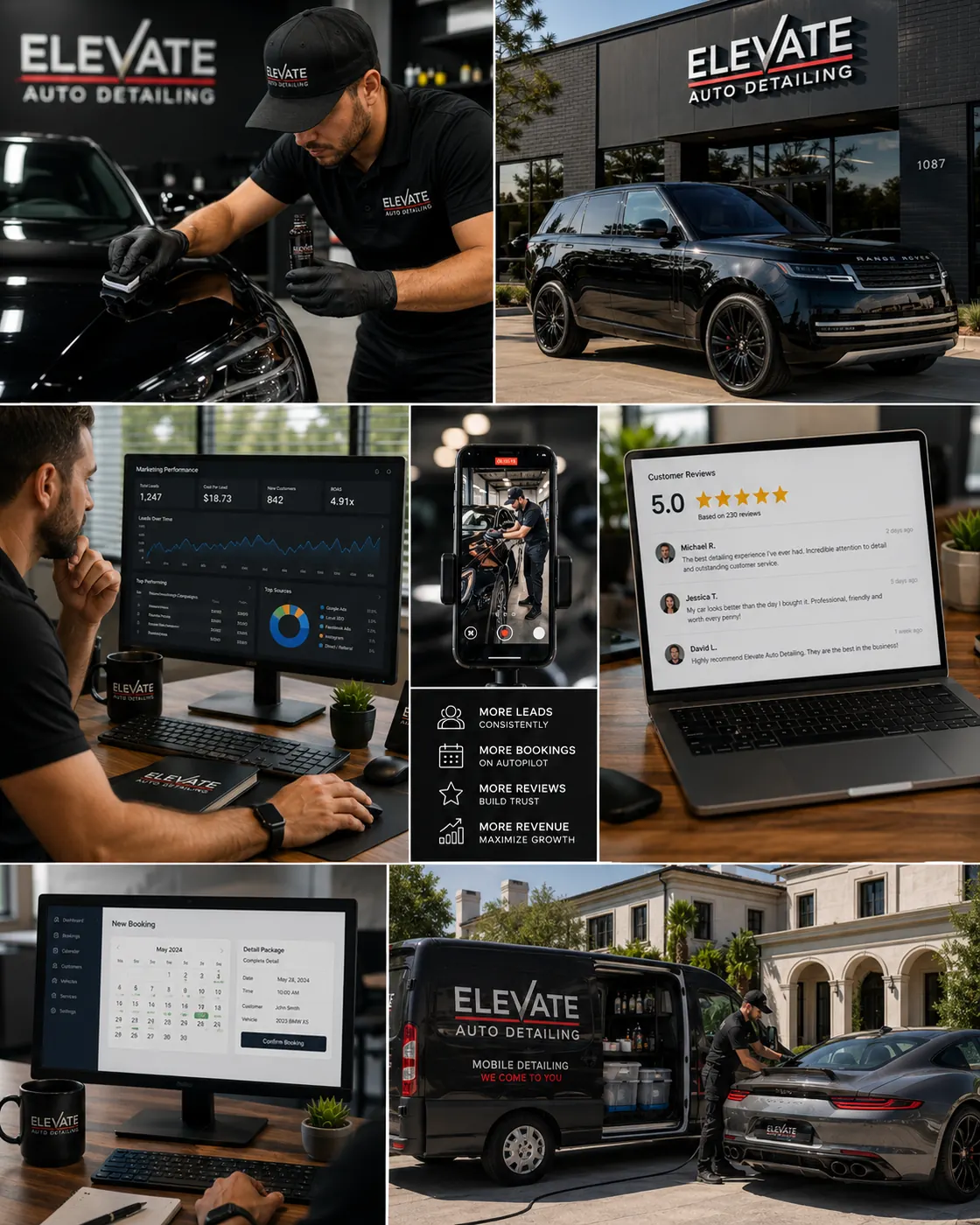
Website & conversion
Make services, proof, pricing expectations, calls, and quote requests easy to understand.

We help auto detailing businesses grow with SEO, Google Ads, Meta Ads, website design, branding, video content, social media, CRM setup, AI-powered follow-up, and lead generation systems built to turn visitors into booked jobs.
Built for detailing studios, mobile detailers, auto spas, ceramic coating businesses, and PPF installers that want a connected growth system instead of disconnected marketing tactics.
Complete growth framework
Most detailing businesses do not need one more isolated channel. They need a connected marketing engine that links brand positioning, website conversion, local visibility, paid demand, visual proof, follow-up, and reporting.
Most detailers do not struggle online because the work is poor. They struggle because the customer journey is disconnected: the website does not convert, the Google profile is under-optimised, ads lead to weak pages, content is inconsistent, and quote requests are not followed up quickly.
Powerhouse Media builds around the way customers actually choose a detailer: they search on Google, compare reviews, check before-and-after proof, visit Instagram, evaluate service pages, ask about pricing, and then decide whether to call or request a quote.
Make services, proof, pricing expectations, calls, and quote requests easy to understand.
Position the business as a premium vehicle-care provider and turn every job into proof.
Connect SEO, Google Ads, Meta Ads, video, and local search around service intent.
Respond faster, nurture quotes, request reviews, and measure booked jobs by source.
A detailing business can have excellent craft and still lose online if its website is generic, its Google Business Profile is stale, its ads are unsegmented, or its best visual proof is trapped in a phone camera roll. The goal is to turn every finished job into a marketing asset and every marketing channel into a path toward a booking.
Where growth breaks
Most detailers are not losing because the work is bad. They are losing because the customer journey breaks before the prospect ever books.
Powerhouse Auto Growth System
The Powerhouse Auto Growth System connects the commercial foundations, customer acquisition channels, conversion experience, and follow-up process into one measurable path.
Clarify the brand, ideal customer, service mix, offer, pricing logic, and premium value proposition.
Create service pages, landing pages, proof galleries, quote paths, tracking, and the website foundation.
Use SEO, Google Ads, Meta Ads, local search, content, video, and social distribution to create demand.
Match every campaign to the right page, proof, CTA, booking action, and quote experience.
Connect instant replies, missed-call follow-up, reminders, review requests, CRM stages, and reactivation.
Use lead quality, booked jobs, close rate, average ticket, and capacity to guide ongoing optimisation.
Premium identity, service hierarchy, offers, and messaging that avoid commodity pricing.
Fast, mobile-first service pages and quote paths for detailing, ceramic coating, and PPF.
Google Business Profile, service pages, local authority, reviews, and content clusters.
Service-segmented search campaigns, landing pages, call tracking, and qualified quote requests.
Demand creation and retargeting powered by visual proof and service-specific creative.
Transformation reels, process clips, testimonials, proof posts, and campaign assets.
Lead stages, instant response, quote follow-up, reminders, reviews, and reactivation.
Calls, forms, bookings, service type, lead quality, close rate, and revenue influence.
Website design for detailers
A detailing website should not only look premium. It should help visitors choose the right service, trust the business, request a quote, call quickly, and book with less friction.
Explore Website DesignSeparate pages for PPF, ceramic coating, paint correction, mobile detailing, interiors, and full-detail packages
Clear quote forms, click-to-call actions, and booking options
Real-vehicle proof galleries with descriptive image text
Reviews, certification badges, warranty information, and installer trust
Package comparisons and realistic pricing expectations
Fast mobile design for local service traffic
Dedicated landing pages for Google Ads and Meta retargeting
Tracking for calls, forms, booking clicks, and completed leads
Why detailing marketing is different
Detailing sits in an unusual spot. It is a local service business, but it is sold almost entirely on visual proof, and the price range can span from a basic wash to a premium ceramic coating or paint protection film package. That spread changes how each segment of the business should be marketed.
Treating all detailing leads as the same audience is one of the most common reasons campaigns underperform. A budget-sensitive interior detail lead should not be pushed through the same funnel as a high-ticket coating buyer comparing warranty tiers and installer credibility.
Before/after transformations, paint correction close-ups, and satisfying process videos are some of the highest-performing assets in the category. A detailing business without a strong photo and video library is leaving its best marketing asset unused.
A person searching car wash near me and a person searching ceramic coating cost are different customers. They have different budgets, different research behavior, and different urgency, so they need different funnels.
Mobile detailing has to sell convenience, service area clarity, and trust at the customer location. Studio marketing has to sell facility quality, location proof, and drive-in confidence.
Most detailing searches have a location component. Google Business Profile quality, local citations, review volume, and recent photos can matter more than generic domain authority.
Ceramic coating and PPF buyers want to understand durability, warranty, tier differences, installer quality, and maintenance before they commit hundreds or thousands of dollars.
SEO for car detailing and auto spa businesses
SEO is the highest-leverage long-term channel for a local detailing business. It builds compounding visibility for people searching near me, service in city, auto spa, mobile detailing, ceramic coating, PPF, and paint correction keywords.
Select the most accurate primary Google Business Profile category, such as Car Detailing Service or Auto Spa, then add secondary categories only when they genuinely match what the business provides.
List interior detailing, exterior detailing, ceramic coating, PPF, paint correction, and mobile detailing as structured services instead of mentioning them only in the business description.
Upload fresh before/after photos and process shots weekly. Profiles with recent visual proof usually feel more active, more trustworthy, and more relevant than static listings.
Seed the Q&A section with questions customers actually ask, including mobile service availability, ceramic coating lifespan, water access, booking time, and maintenance requirements.
Respond to every review within 48 hours, positive or negative, and keep name, address, and phone information identical across the website, GBP, Yelp, directories, and local chamber listings.
Each major service should have its own dedicated page instead of being buried inside one combined services page.
Structure titles and URLs around service plus city, such as Ceramic Coating in Austin or Mobile Detailing in Scottsdale.
Include pricing ranges, service duration, what is included, and what is not included directly on the page because these are the questions searchers compare before contacting a shop.
Embed before/after galleries and short process videos with descriptive alt text that explains the service, vehicle, result, and location where appropriate.
Implement LocalBusiness schema for the business, Service schema for each offering, Review schema for testimonials, and FAQPage schema for service-specific questions.
Blog and resource content captures top-of-funnel searches from people researching before they are ready to book, while reinforcing topical authority across service pages.
How Much Does Ceramic Coating Cost? 2026 Pricing Breakdown
Ceramic Coating vs. PPF: Which Protects Your Car Better?
How Often Should You Get Your Car Detailed?
What Happens During a Full Interior Detail?
Winter Car Care: Protecting Your Paint From Road Salt
Core Web Vitals in the Good range, mobile-first design, HTTPS, compressed WebP visuals, clean XML sitemap, no orphan pages, and internal links between this pillar, service pages, location pages, and supporting articles.
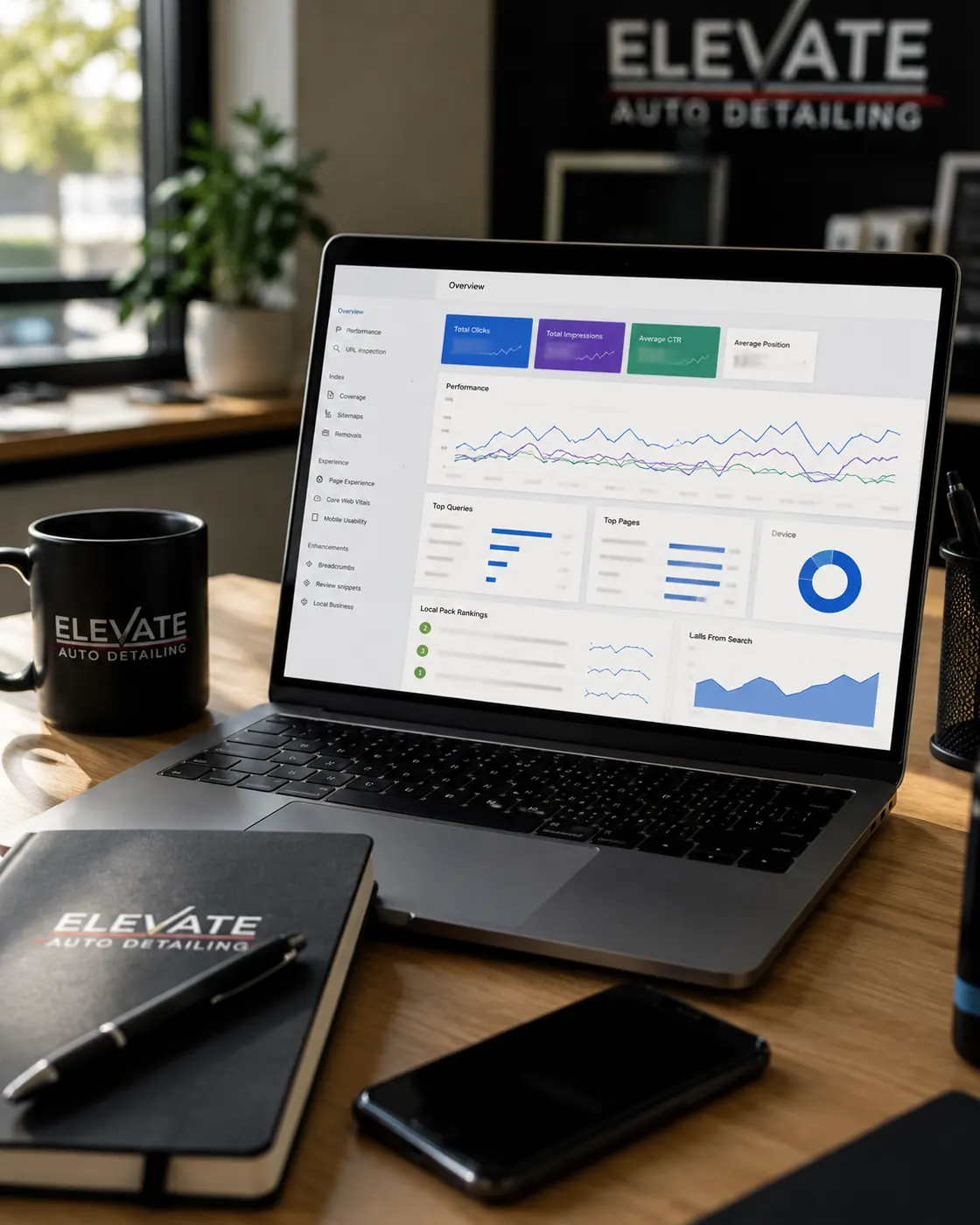
SEO is not instant, but it is one of the most durable channels in local detailing. The timeline depends on competition, existing authority, review velocity, location density, and how quickly new service pages and content are published.
GBP optimization, technical fixes, service page rebuilds, and initial content published.
Indexing improvements, early ranking movement for lower-competition local keywords, and a minor traffic increase.
Content velocity increases, citations and reviews accumulate, before/after galleries expand, and internal links become stronger.
Noticeable Map Pack visibility improvement, ranking gains for mid-competition terms, and steady organic lead growth.
Topical authority is established across service, city, and location combinations.
Multiple page-one rankings, organic traffic becomes a primary lead source, and reliance on paid ads decreases for branded/local demand.
Google Ads for car detailing businesses
Google Ads delivers fast visibility for people who already know they want a wash, full detail, mobile detail, ceramic coating, or paint protection film installation. The key to profitable campaigns is structure. Broad, unsegmented campaigns waste budget on low-intent clicks.
Cost-per-click varies by service tier and location. Ceramic coating and PPF keywords are usually more expensive than basic wash/detail terms because the lifetime value is higher and competition is stronger. A good account tracks phone calls, forms, online booking completions, and quote requests as core conversion actions.
Build separate Search campaigns by service tier: basic wash/detail, interior/exterior detailing, ceramic coating, PPF, and mobile detailing.
Separate branded campaigns from non-branded acquisition campaigns so people searching your business name do not consume budget meant for new demand.
Use Local Services Ads or Performance Max as supplementary visibility layers, while keeping Search campaigns as the core system for precise control.
Target searches like car detailing near me, auto detailing city, mobile detailing near me, ceramic coating cost, PPF installation city, interior detailing, paint correction near me, and auto spa city.
Add negative keywords like DIY, how to, kit, jobs, supplies, franchise, and training to filter out people who are not looking to book a service.
Keep ceramic coating and PPF keywords separate from basic wash/detail searches because CPCs, customer value, and buying questions are different.
Mirror the exact ad intent in the headline. If the ad sells ceramic coating, the landing page should not open with generic detailing copy.
Place review rating, years in business, certifications, product partner badges, click-to-call, and booking options above the fold.
Use service-specific before/after proof and testimonials instead of sending all traffic to the homepage.
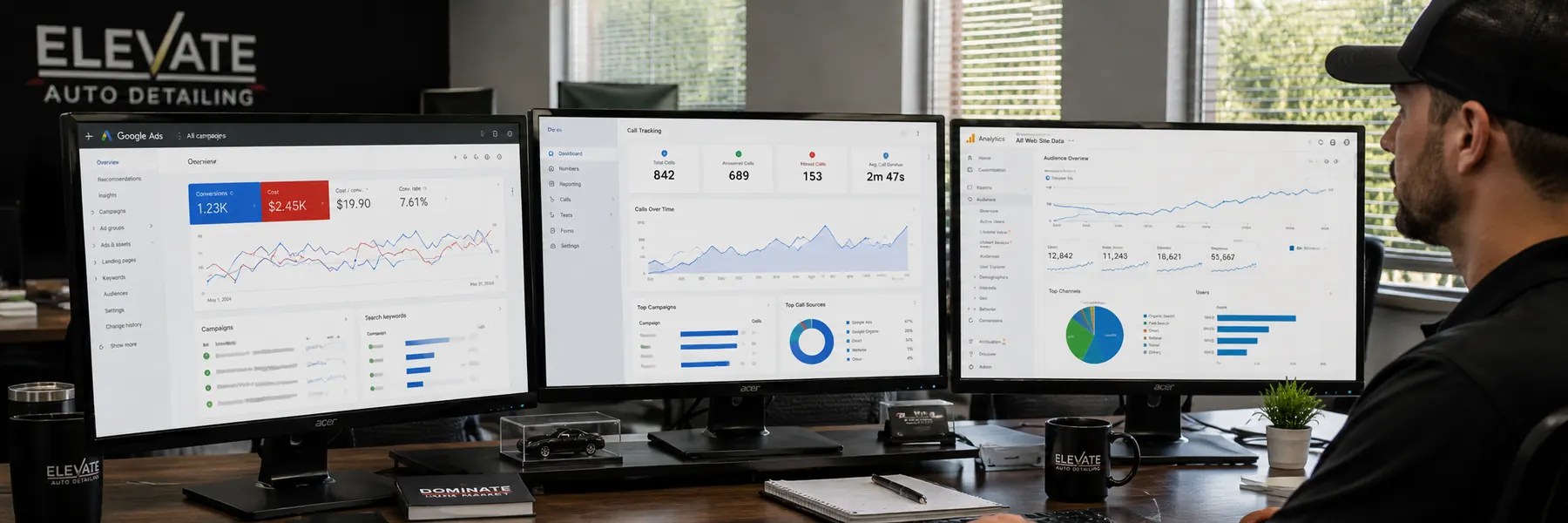
Modest starting budget, scaled based on cost-per-lead data
One or two core services, tight service-area targeting, and a branded campaign included.
Moderate budget across three to five service campaigns
Full service menu coverage, retargeting layer, seasonal promotions, and dedicated landing pages.
Budget allocated per location based on local demand and capacity
Location-specific campaigns, centralized branded campaign, and broader visibility testing.
Meta ads for visual demand creation
Google captures intent. Meta creates demand. Detailing is naturally watchable, which makes Facebook, Instagram, and short-form video powerful for both cold audiences and retargeting.
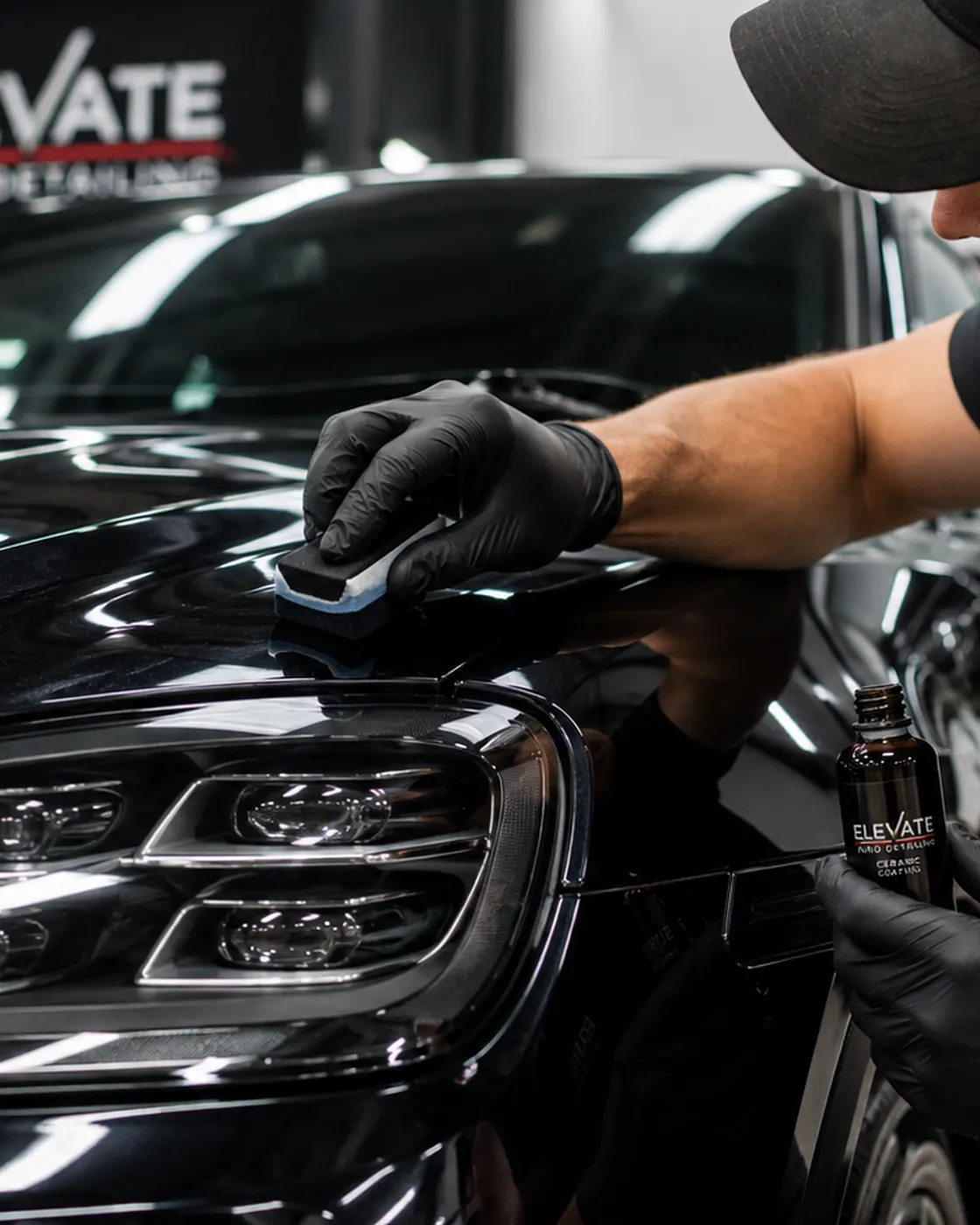
A cold audience scrolling Instagram is not searching for ceramic coating, but a well-shot before/after reel or satisfying paint correction clip can stop the scroll and plant the idea immediately.
Awareness campaigns can introduce a new service, new ceramic coating offer, PPF installation package, or new location to cold local audiences.
Retargeting campaigns should re-engage people who visited service pages but did not book. This group usually converts at a meaningfully higher rate than cold traffic.
Lookalike audiences built from customer lists help Meta find people who share traits with your highest-value past buyers.
Short-form video under 30 seconds should show the payoff in the first three seconds. Mud-to-shine transformations, foam cannon shots, paint correction close-ups, and customer reactions are especially useful.
Certifications and product partner branding are important for ceramic coating and PPF. They reassure higher-ticket buyers that the work is backed by a recognized system.
Very low. Pre-filled fields and no page load.
Higher. Requires page load and manual entry.
Lower on average, usually better for simple wash or basic detail offers.
Higher, usually better for ceramic coating, PPF, and consultation-style offers.
Limited unless integrated with CRM and offline conversion tracking.
Full funnel tracking through GA4, pixels, call tracking, and retargeting audiences.
Top-of-funnel awareness, lower-cost services, and fast appointment generation.
Retargeting, high-ticket services, detailed education, and audience building.
Branding, video & social content
Detailing is visual, but content works best when it supports positioning and conversion. A premium coating studio needs a different creative system from a convenience-led mobile detailer.
Explore Branding ServicesPositioning, visual identity, service menus, quote documents, and a consistent premium presentation.
Before-and-after reveals, process footage, coating close-ups, PPF installation, and customer reactions.
Reels, proof posts, review graphics, educational carousels, offers, and a sustainable monthly calendar.
Service-specific hooks, ad variations, landing-page visuals, retargeting proof, and seasonal campaigns.
CRM & AI automation
Leads are expensive. Losing them because nobody replied fast enough is one of the easiest problems to fix. Automation supports the team by keeping every enquiry visible and every next step consistent.
Missed-call text back
Instant SMS or WhatsApp acknowledgement
Common service and pricing answers
Quote follow-up sequences
Booking reminders
Review request automation
Past-customer reactivation
CRM stages from new lead to completed job
Tracking and conversion measurement
A detailing business can have clean ads, strong SEO, and beautiful creative, but still make weak decisions if the reporting only shows surface metrics. Leads are not all equal. A ceramic coating consultation, a mobile wash inquiry, a fleet quote, and a price-shopping message should not be valued the same way.
The goal is to connect marketing activity to booked appointments, revenue, and service mix. That means tracking calls, forms, booking widgets, thank-you page conversions, and qualified lead outcomes inside the CRM or appointment system whenever possible.
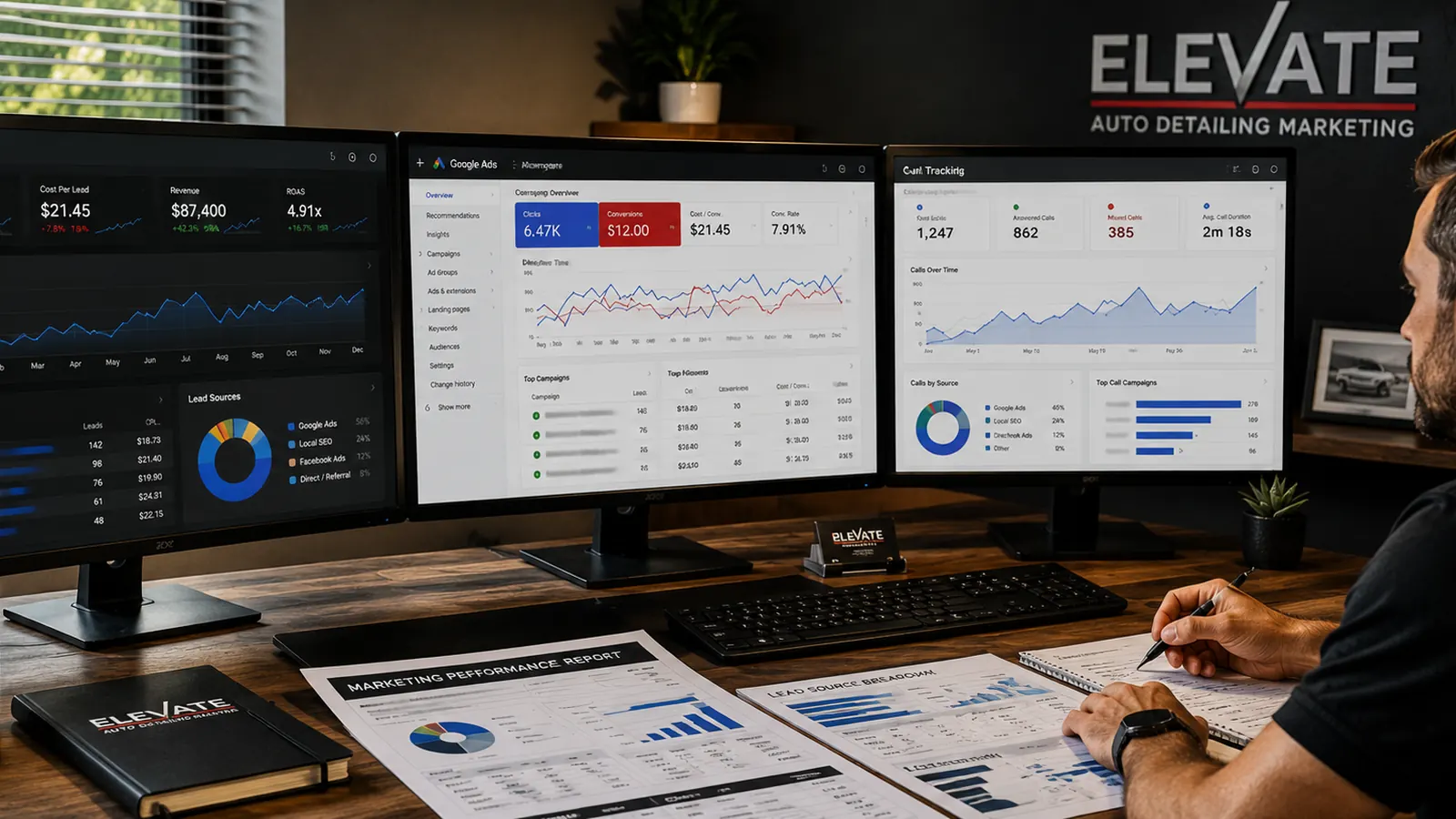
Many detailing bookings still happen by phone, especially for urgent mobile details, fleet work, and higher-ticket coating consultations. Call tracking should separate calls from SEO, Google Ads, GBP, and retargeting so the business can see which channels produce real conversations.
Every form start, form submit, booking click, quote request, and calendar completion should be tracked as a separate event. This prevents the business from treating a casual button click the same as a completed lead.
The highest-performing detailing accounts measure more than cost per lead. They track booked jobs, no-shows, average ticket, ceramic or PPF quote value, close rate, and which services produce the best return.
A customer may discover the shop on Instagram, compare reviews on Google, revisit a service page, and finally call from a branded search. Reporting should account for that journey instead of crediting only the last click.
Use GA4 events to track form_start, form_submit, generate_lead, click-to-call actions, booking clicks, and thank-you page conversions. DebugView should confirm that these events fire when a real user goes through the funnel.
Tag leads by source, campaign, service, and outcome. The business should know which channel produced a booked ceramic coating job, not just which channel produced a form fill.
Review channel performance monthly by cost per qualified lead, booked jobs, close rate, average ticket, and revenue influence. This keeps budget moving toward channels that create real growth.
Mobile detailing marketing strategies
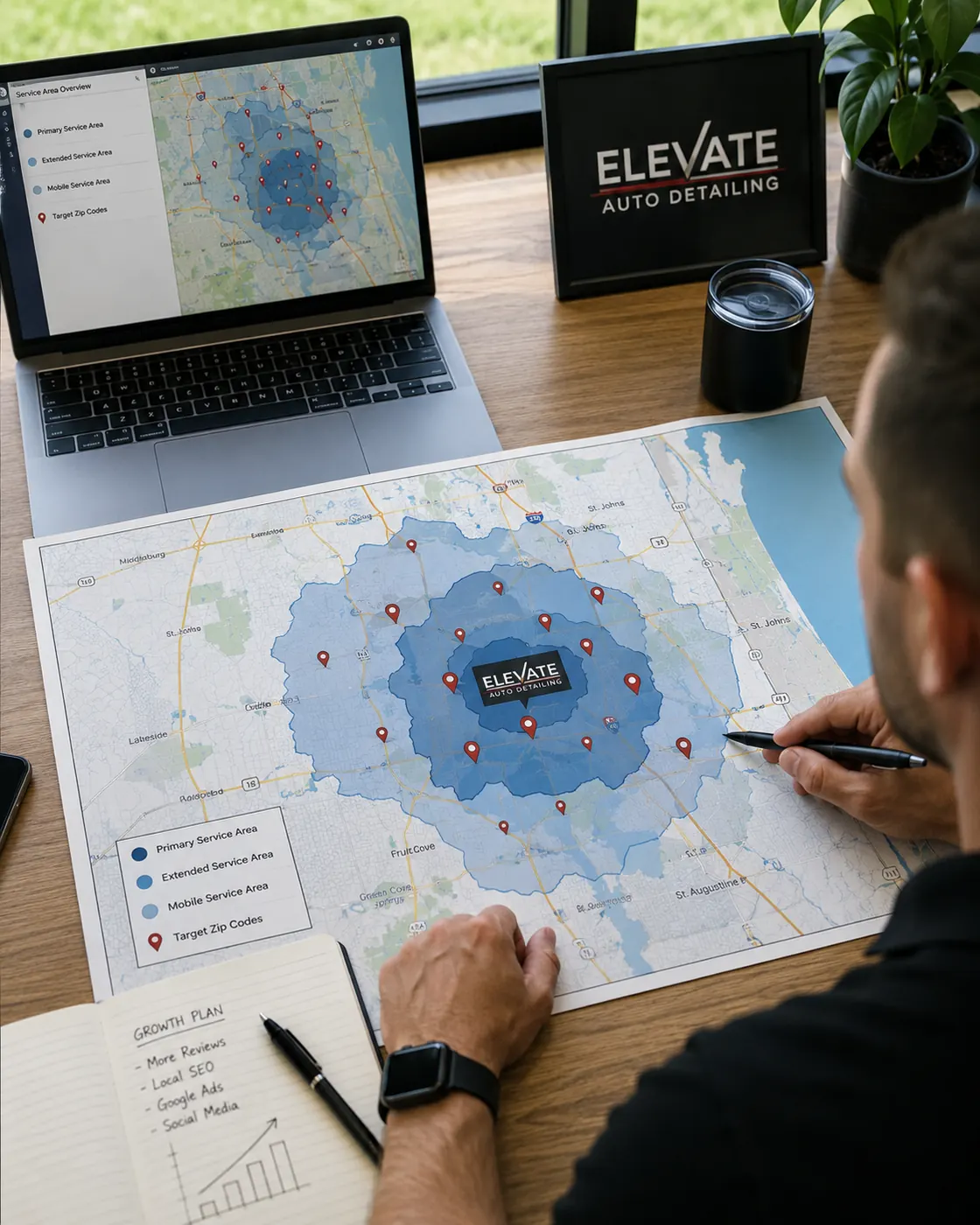
Mobile detailing has its own marketing logic because the core value proposition is convenience, and the trust requirement is higher. The customer is letting someone work on a vehicle at home, at work, or in a parking lot, so the funnel has to remove uncertainty fast.
Build a dedicated landing page for each city, suburb, or zone you actually service, with local landmarks, typical drive times, area-specific testimonials, and clear coverage boundaries.
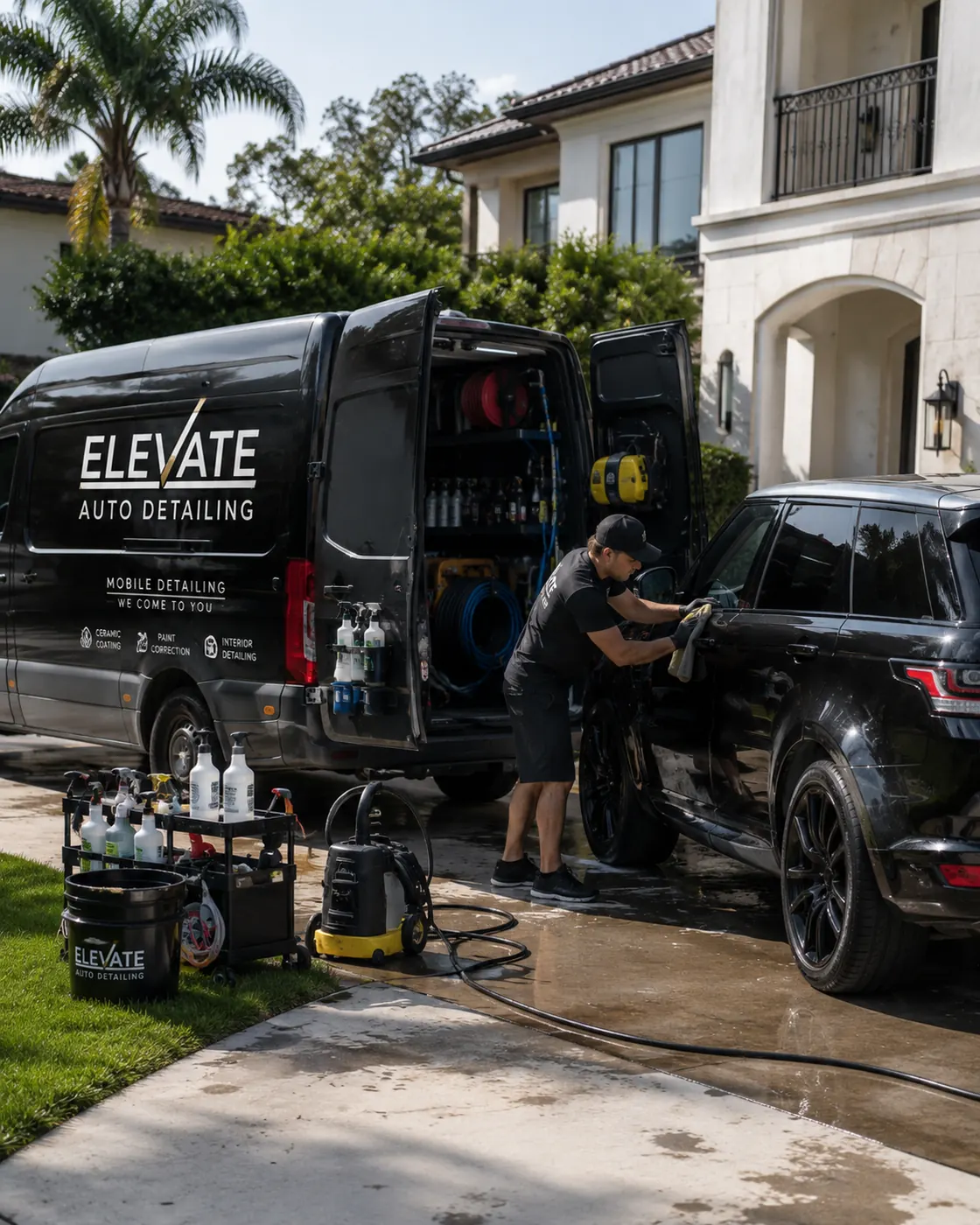
Lead with convenience: home, office, gym parking lot, apartment complex, or fleet location. Show the van, water tank, generator, setup, insurance, and process so prospects understand how the service works.
Mobile detailing bookings are highly sensitive to scheduling friction. Real-time availability by zone usually converts better than a generic contact form because customers can immediately see whether a slot works.
The strongest mobile-detailing content explains what happens before the customer books. Show how the setup works, whether water and power are needed, how long the job takes, and what the customer should expect when the van arrives.
Convenience plus local intent
Mobile Detailing in [City] - We Come To You | Book Online
On-location process video
Short video showing the van arriving, setting up, and transforming a vehicle at a customer home.
Zone-specific availability
Still need your car detailed? We are in your area this week - grab a slot.
Ceramic coating and PPF marketing
Ceramic coating and paint protection film are often the highest-ticket and highest-margin services in a detailing business. They require a fundamentally different marketing approach than a basic wash or detail.
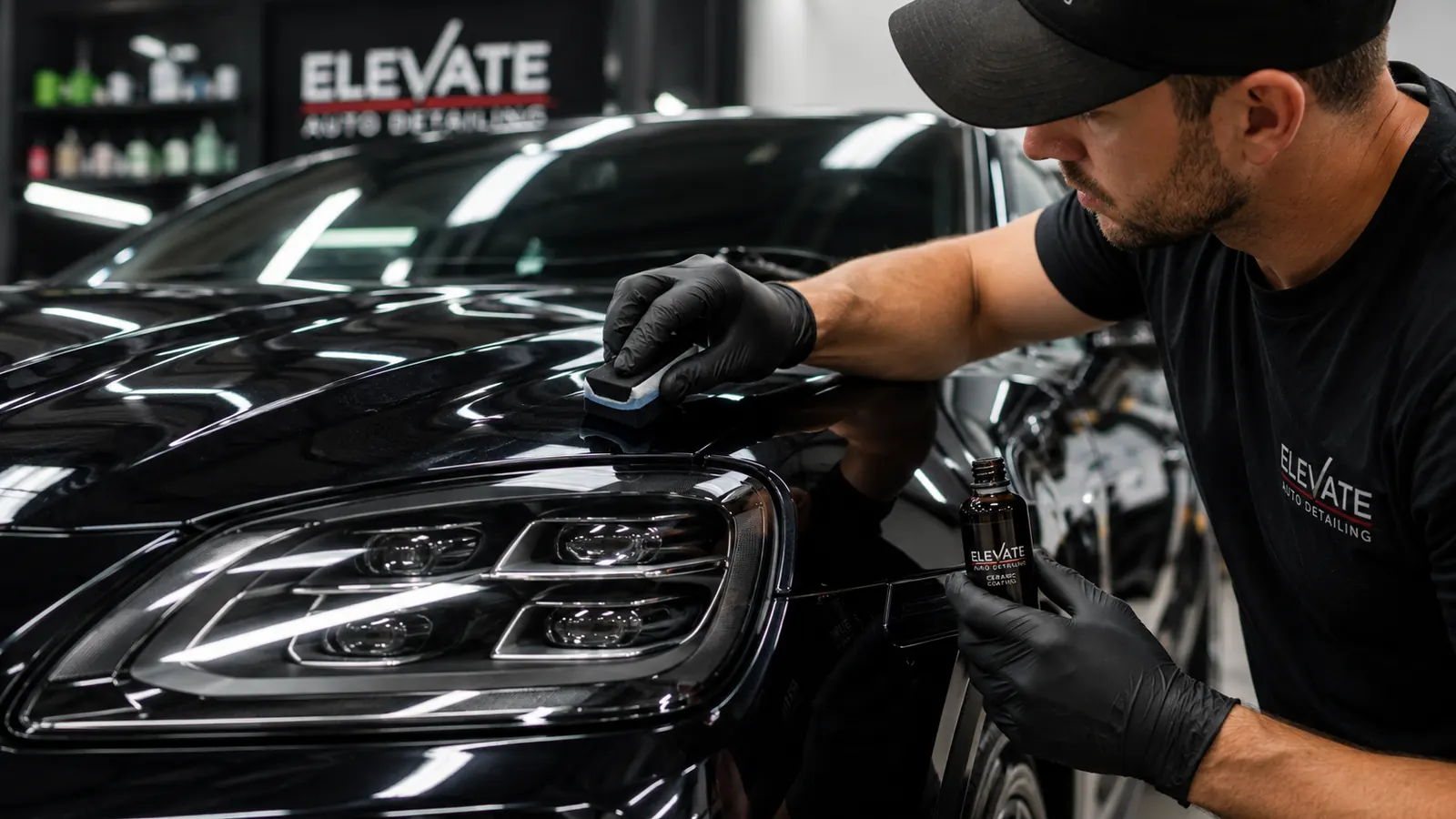
Use education-first funnels for ceramic coating and PPF instead of relying only on urgency or discounts. Buyers want confidence before they want a coupon.
Build separate pages for ceramic coating and PPF because they are different products with different price points, use cases, objections, and customer questions.
Present coating tiers, warranty lengths, maintenance requirements, and package differences in a comparison format that mirrors how customers already compare providers.
Show certifications or authorized-installer status for recognized product brands prominently. This is one of the strongest trust signals for high-ticket services.
Create content around durability, maintenance, coating vs. PPF, whether coating is worth it for daily drivers, and what to avoid in the first 30 days after installation.
Comparison plus certification trust
Certified Ceramic Coating in [City] - Compare Tiers & Warranty | Book A Consult
Satisfying application and reveal video
Time-lapse of coating or PPF application ending on a crisp finished reveal.
Tier comparison plus consultation offer
Still comparing ceramic coating packages? Book a free consult to find the right tier.
Pricing pages should clearly lay out what is included at each tier and why a higher tier might be worth it. This framing improves uptake of higher packages compared with presenting only one number and forcing the buyer to guess what makes each option different.
Service marketing matrix
SEO, Google Ads, video, retargeting
Research-heavy, high-ticket buyers need education and proof.
Google Ads, website, retargeting, galleries
Buyers compare warranty, installer quality, product trust, and examples.
Google Maps, local SEO, service-area pages
Convenience, coverage, trust, and booking availability drive the decision.
Before/after content, SEO, Meta Ads
A visible transformation communicates value quickly.
Meta Ads, Google Maps, local offers
Strong recurring and seasonal demand with clear visual proof.
Branding, website, video, SEO
Premium positioning and trust matter more than discount-led messaging.
Landing pages, outreach, Google Search
Commercial buyers need reliability, process, capacity, and repeat scheduling.
Growth systems
The scope should follow the bottleneck. A new mobile detailer needs a different foundation from a multi-service shop scaling ceramic coating and PPF.
Best for
New or small detailers building a stronger foundation.
Includes
Website audit, Google Business Profile, local SEO basics, tracking, and essential service-page improvements.
Discuss This SystemBest for
Shops ready to generate more qualified quote requests.
Includes
Google Ads, Meta Ads, landing pages, call and form tracking, retargeting, and monthly optimisation.
Discuss This SystemBest for
Detailers who want one partner managing the complete marketing engine.
Includes
SEO, paid media, website design, branding, content, CRM, automation, tracking, and reporting.
Discuss This SystemBest for
PPF, coating, and luxury detailing brands targeting higher-ticket clients.
Includes
Premium positioning, website and funnels, SEO cluster, campaigns, video, AI follow-up, reviews, and advanced reporting.
Discuss This SystemHow the system works in practice
These anonymised use cases show how the strategy changes across different detailing business models. They explain the challenge, execution, and operational outcome without presenting unverified campaign figures or performance guarantees.
Challenge
The group relied on a single generic locations page and inconsistent Google Business Profiles. Organic visibility for service plus location searches was minimal, and most leads came from expensive paid campaigns.
Strategy
Built individual location pages with unique content and embedded maps, optimized each location profile with structured services and weekly photos, and launched a content calendar targeting service in city keywords.
Result
The system creates separate local assets for each market, makes Google profile activity consistent, and gives the team a clear way to measure organic calls and bookings by location.
Challenge
The studio offered everything from basic washes to ceramic coating but ran one broad Google Ads campaign with no service segmentation, no negative keyword strategy, and traffic sent to the homepage.
Strategy
Restructured campaigns by service tier, separated branded and non-branded traffic, built dedicated landing pages with transparent pricing and certification badges, implemented call tracking, and applied negative keywords.
Result
The system separates low-ticket and high-ticket demand, aligns each ad with the correct service page, and gives the shop clearer cost-per-qualified-lead and booking data.
Challenge
The business had decent reach from organic social content but a low percentage of website visitors converting into bookings, with no retargeting system in place.
Strategy
Launched Meta retargeting for visitors who viewed service pages but did not book, using on-location process videos, zone-specific availability, and lookalikes from the existing customer list.
Result
The system gives warm visitors a relevant reason to return, while service-area messaging and CRM follow-up make booking opportunities easier to recover and measure.
Frequently asked questions
Car detailing marketing is the connected strategy used to attract, convert, and retain customers for detailing, auto spa, mobile detailing, ceramic coating, and PPF businesses. It can include SEO, paid media, website design, content, reviews, CRM, follow-up, and tracking.
No. SEO is one part of the system. Powerhouse Media can also support Google Ads, Meta Ads, website design, branding, video content, social media, CRM setup, responsible AI follow-up, reporting, and lead-generation funnels.
Google Ads can work well when campaigns are structured by service, location, and search intent. Ceramic coating, PPF, mobile detailing, and general detailing should normally have separate keywords, landing pages, budgets, and tracking.
It depends on urgency, budget, local competition, current visibility, and website quality. Paid ads can capture demand sooner, while SEO builds longer-term local visibility. Many shops benefit from running both around a website that converts.
A strong detailing website should include dedicated service pages, reviews, before-and-after proof, pricing guidance, quote forms, click-to-call actions, booking options, location or service-area pages, fast mobile performance, and conversion tracking.
Yes. The recommended structure uses separate PPF, ceramic coating, paint correction, mobile detailing, and service-area pages with package comparisons, installer proof, reviews, warranty information, and clear quote paths.
Ceramic coating marketing works best with education-first content, high-intent Google Search campaigns, service-specific landing pages, package comparison, proof galleries, reviews, and consistent quote follow-up.
Mobile detailers should focus on service-area pages, Google Maps visibility, convenience-focused landing pages, local ads, visual proof, clear availability, and fast follow-up. Coverage and booking expectations should be obvious.
A CRM and follow-up system helps track enquiries, quotes, booked jobs, completed work, review requests, reminders, and reactivation opportunities. It can improve booking efficiency without requiring more traffic.
Useful measurement includes calls, forms, quote requests, booking clicks, booked jobs, close rate, average ticket, lead source, requested service, reviews, and revenue influence where reliable business data is available.
Powerhouse Media focuses on the full growth system: brand, website, SEO, ads, content, CRM, automation, tracking, and optimisation instead of treating each marketing channel as a disconnected task.
Yes. Mobile and studio-based businesses require different funnels. Mobile detailers need coverage and convenience clarity, while studios need facility trust, premium positioning, local visibility, and service-specific proof.
Yes. A detailing content system can include transformation reels, before-and-after posts, process clips, testimonials, review graphics, educational posts, offer creative, and a practical monthly publishing plan.
Timelines vary by city, competition, website authority, Google profile strength, reviews, and content quality. Early movement may appear within a few months, while stronger local visibility commonly requires consistent work over six to twelve months.
Yes. Work can be structured around visibility, lead generation, full-service growth, or premium auto spa scaling depending on the business stage, service mix, capacity, and goals.
Car detailing marketing works best as an integrated system, not disconnected tactics. SEO builds long-term local visibility. Google Ads captures high-intent demand. Meta Ads creates demand through visual storytelling. Service-specific funnels turn clicks into booked appointments.
The detailing businesses that grow fastest treat each channel as part of one connected path: SEO and paid ads drive traffic to dedicated pages, those pages feed retargeting audiences, and retargeting supports higher-ticket upsells like ceramic coating and PPF for long-term customer value.
Get Your Free Audit