Ceramic Coating Google Ads Strategy: Attract High-Ticket Clients
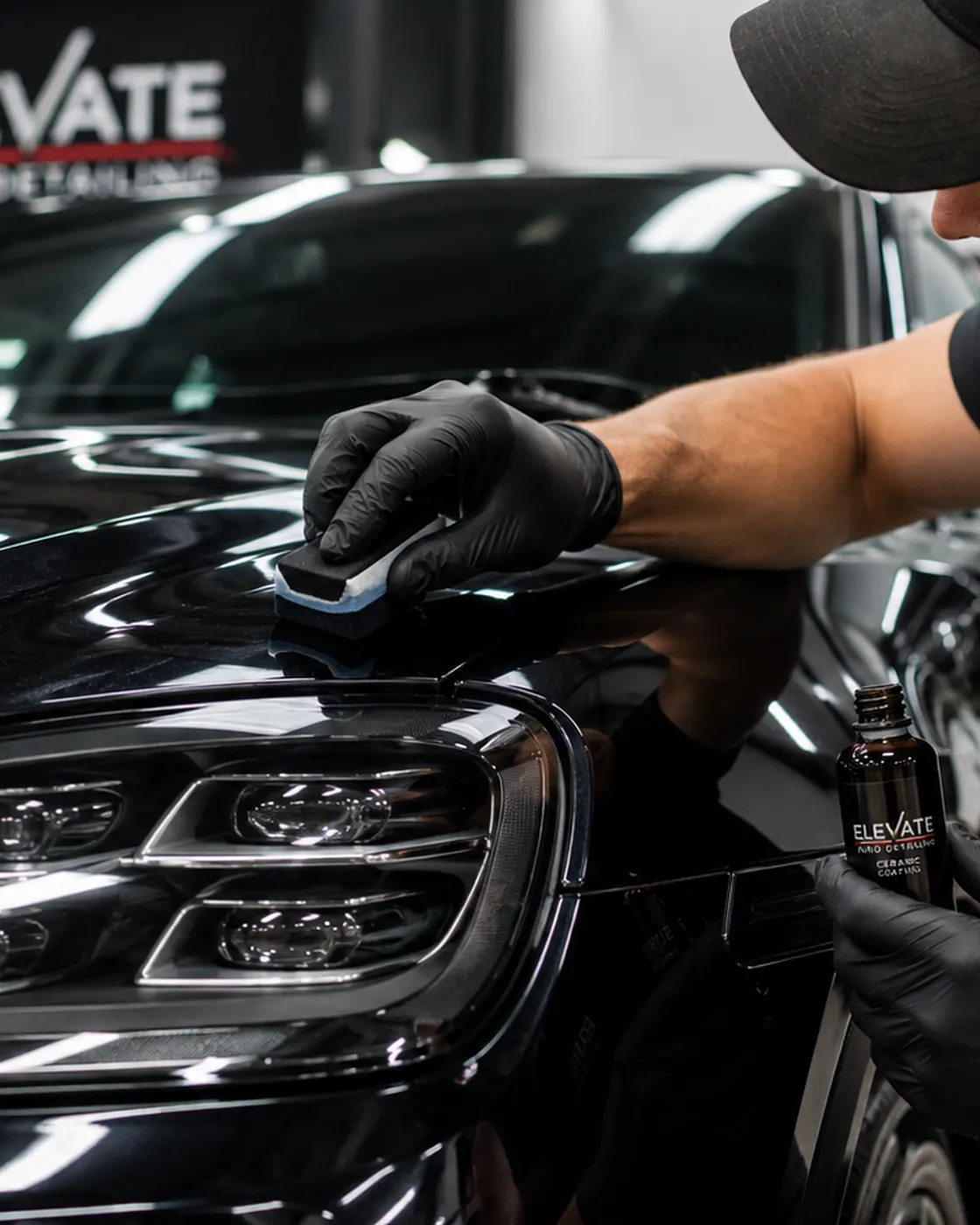
This page is the paid-search specialist within the broader car detailing marketing cluster. It covers campaign economics, search terms, ads, landing pages, qualification, and booked-job measurement. For positioning, packages, organic visibility, content, sales, and retention, use the separate ceramic coating marketing guide.
Start With the Service Economics, Not a Generic Ad Budget
Ceramic coating packages differ by vehicle condition, preparation, correction work, coating system, warranty, labor, and aftercare. Build the campaign around the shop's documented contribution margin and capacity rather than an assumed industry ticket or cost per click.
Record the completed-job value, direct labor and material cost, payment fees, rework allowance, and any sales commission. Then define the maximum acquisition cost the business can tolerate while preserving its target contribution. A lead target cannot be set responsibly until the shop also knows its valid-lead, qualification, booking, cancellation, and completion rates.
Ceramic Coating Paid-Search Campaign Brief
| Decision | Required input | Launch condition |
|---|---|---|
| Service | Package scope, exclusions, preparation, price factors, warranty, capacity | The team can quote and fulfil it consistently |
| Geography | Real service area, travel behavior, location eligibility | Targeting matches where the shop can serve profitably |
| Intent | Search themes and actual search-term review plan | Buyer, research, DIY, product, training, and job-seeker intent can be separated |
| Promise | Verifiable proof, authorization, warranty terms, prices, and availability | Every ad claim is accurate on the destination page |
| Conversion | Call, estimate, inspection, or booking path | The action works and creates one operational record |
| Measurement | Qualified lead, booked job, completed job, revenue, and loss reasons | Campaign decisions can use business outcomes |
Organize Search Intent Before Choosing Keywords
Build tightly related themes around local professional installation, service cost, installer comparison, vehicle-specific needs when the shop has genuine expertise, and branded searches. Match each theme to the most relevant service information instead of sending every query to a generic homepage.
Review actual search terms throughout the test. DIY products, application instructions, training, certification courses, jobs, wholesale supplies, unrelated coating types, and locations outside the service area may be irrelevant. Add a negative only after confirming the intent is not valuable; words such as “cost” or “affordable” can indicate legitimate comparison behavior and should not be excluded automatically.
Write Ads From Verified Proof
Ad copy should state the service, genuine location or service area, meaningful next step, and a differentiator the business can prove. Use certification, authorized-installer status, warranty duration, review rating, completed-job count, starting price, or availability only when current records and the landing page support the exact claim.
Do not imply that ceramic coating prevents all scratches, eliminates maintenance, or protects a vehicle for a fixed period regardless of product, preparation, use, and care. Align the ad with the actual manufacturer warranty and the shop's written service terms.
Make the Landing Page Qualify the Right Job
The destination page should explain who the package is for, what preparation is included, what changes the estimate, realistic maintenance expectations, warranty conditions, and the next step. Use real work with permission and captions that explain the vehicle condition and process; impressive vehicles alone are not proof of outcome.
Ask only for information needed for the next decision, such as contact details, vehicle, condition, desired outcome, location, and timing. A direct booking may suit a standardized package; an inspection or estimate request may suit work whose scope depends on paint condition.
Measure From Search Term to Completed Job
| Stage | Measure | Diagnostic question |
|---|---|---|
| Traffic | Search term, click, location, device, landing page | Did the campaign attract the intended local demand? |
| Enquiry | Valid call, form, estimate, or inspection request | Did the page produce a real opportunity rather than spam or a duplicate? |
| Qualification | Service fit, vehicle condition, timing, budget fit, loss reason | Is poor lead quality caused by intent, promise, page, or offer? |
| Booking | Quoted value, booked value, deposit, cancellation | Can the team turn suitable enquiries into scheduled work? |
| Completion | Completed value, direct cost, rework, contribution | Does the campaign produce work worth repeating? |
A low click-through rate may indicate weak relevance or copy, but it is not a reason to chase clicks at the expense of qualification. A high form rate with poor booked outcomes may indicate misleading promises, insufficient price context, weak routing, or low-quality traffic. Diagnose the stage before changing bids or creative.
Run a Bounded Test
Define the start and end dates, total affordable spend, service capacity, response owner, geographic scope, search-term review cadence, and stop conditions before launch. Change one material variable at a time when practical, and preserve a record of what changed.
Automated campaign types can be considered only when their inventory, controls, reporting, creative requirements, and conversion signals fit the business. Do not select a campaign type from a universal conversion threshold or assume broader automation will improve lead quality.
Frequently Asked Questions
What CPC should I expect for ceramic coating Google Ads?
Cost per click varies by auction, query, location, device, competition, quality, and time. Use current account forecasts and a bounded live test, then judge affordability from qualified and completed outcomes rather than a published benchmark.
Should I use Performance Max campaigns for ceramic coating?
Choose it only when the business understands the additional inventory, has suitable creative and conversion signals, and can assess lead quality beyond platform-reported conversions. Standard Search may provide clearer initial search-intent control, but the correct choice depends on the account and objective.
How many leads do I need per month to make ceramic coating ads profitable?
Work backward from completed-job contribution, not revenue alone. Required leads depend on valid-lead rate, qualification rate, booking rate, cancellations, completion rate, direct costs, and the acquisition-cost ceiling. Use the shop's records rather than a generic example.
Should I include pricing in ceramic coating ads?
Include a price only when it is current, meaningful for the advertised package, and not misleading once mandatory preparation or common conditions are considered. When an accurate starting price is impossible, explain the factors that determine the estimate on the landing page.
Conclusion
A ceramic coating paid-search campaign should connect a specific service and truthful promise to measurable completed work. Control intent, qualify transparently, and scale only when the shop's own economics and capacity support the decision.
Related Resources
- Car Detailing Marketing Guide
- Google Ads for Car Detailing Businesses: How to Generate More Bookings
- Ceramic Coating Marketing Guide: How to Sell More High-Ticket Packages
- PPF Marketing and Lead Generation for Paint Protection Film Installers
Need the campaign and booked-job measurement reviewed? Read the full car detailing marketing strategy or request a car detailing growth audit.
Car Detailing Marketing Cluster
Build the full detailing growth system
Ready to apply this to your brand?
We partner with brands looking to scale profitably.
Apply for a strategy call