Why Paid Ad Performance Declines—and How to Diagnose It
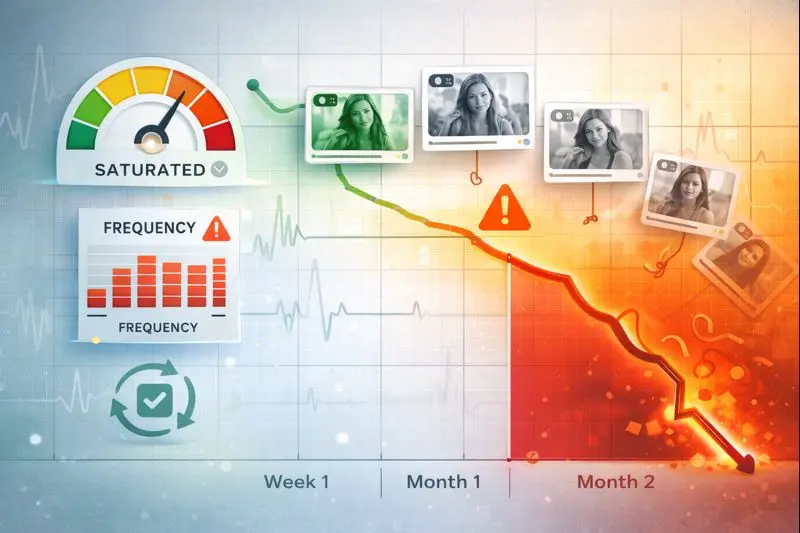
A Performance Drop Is a Symptom, Not a Diagnosis
Rising acquisition cost or falling return can come from creative fatigue, audience saturation, auction pressure, seasonality, offer changes, inventory, website problems, tracking loss, lead handling, or normal variance. “Month two” is not a universal failure point.
Freeze major changes long enough to establish when the movement began, which segments changed, and whether the decline appears in platform data, site data, CRM outcomes, or reconciled revenue.
Build a Time-Series Comparison
- Use complete, comparable periods and account for weekday and seasonal patterns.
- Segment by campaign, audience, placement, creative, geography, device, product or offer, and new versus returning customer.
- Mark releases, budget changes, promotions, stock issues, tracking changes, and sales-process changes on the timeline.
- Compare spend, reach, frequency, CPM, click rate, landing-page views, conversion rate, qualified outcomes, revenue, and margin.
Test the Main Diagnostic Branches
- Creative: Declining response concentrated in older concepts may support a fatigue hypothesis, but review conversion quality before replacing them.
- Audience and auction: Rising frequency, CPM, or overlap can indicate saturation or competition; there is no universal frequency threshold.
- Offer and market: Price, promotion, demand, competitor activity, and seasonality can change response even when the ads are unchanged.
- Website or funnel: Stable traffic with weaker conversion suggests landing-page, checkout, form, speed, stock, or message-match issues.
- Measurement: Tag, consent, attribution, CRM, or offline-import changes can make performance appear to decline without the same change in real outcomes.
- Operations: Slower response, lower answer rates, fulfillment delays, and sales-capacity constraints can reduce revenue after the platform conversion.
Choose the Smallest Corrective Test
If evidence points to creative, test a new angle or format while holding the audience and offer stable. If it points to the page, fix the page before replacing the ads. If measurement changed, repair and reconcile it before using reported return to reallocate budget.
Define the expected leading signal, business outcome, test window, stop condition, and rollback before launch. Avoid changing creative, audience, budget, offer, and landing page simultaneously.
Audit Automation and Low-Volume Signals
Automated campaign types still require accurate conversion events, suitable creative, clear exclusions, budget controls, and outcome review. If a campaign optimizes toward an easy but low-value action, more automation can scale the wrong result.
For low-volume accounts, do not promote a soft event to the primary optimization goal merely to create more data. First confirm that the event predicts qualified leads or purchases. Where it does not, improve measurement, consolidate compatible activity, lengthen the decision window, or use a strategy appropriate to the available signal.
Also compare ad clicks with actual landing-page views and downstream conversion. A stable click rate with fewer page views or completed actions can indicate speed, message-match, form, checkout, or tracking problems rather than an ad-platform issue.
Prevent Recurrence
Maintain a creative pipeline, change log, alert thresholds, inventory and offer calendar, landing-page monitoring, and CRM-quality review. The goal is not constant rotation; it is having enough evidence and prepared alternatives to respond without panic.
Use the related Meta Ads account audit framework to check whether structure or economics contributed to the decline, or request a broader performance marketing audit.
Related Insights
Continue exploring Paid Ads
Ready to apply this to your brand?
We partner with brands looking to scale profitably.
Apply for a strategy call