SaaS Google Ads Case Study: 26.91x ROAS From Funnel-Segmented Search
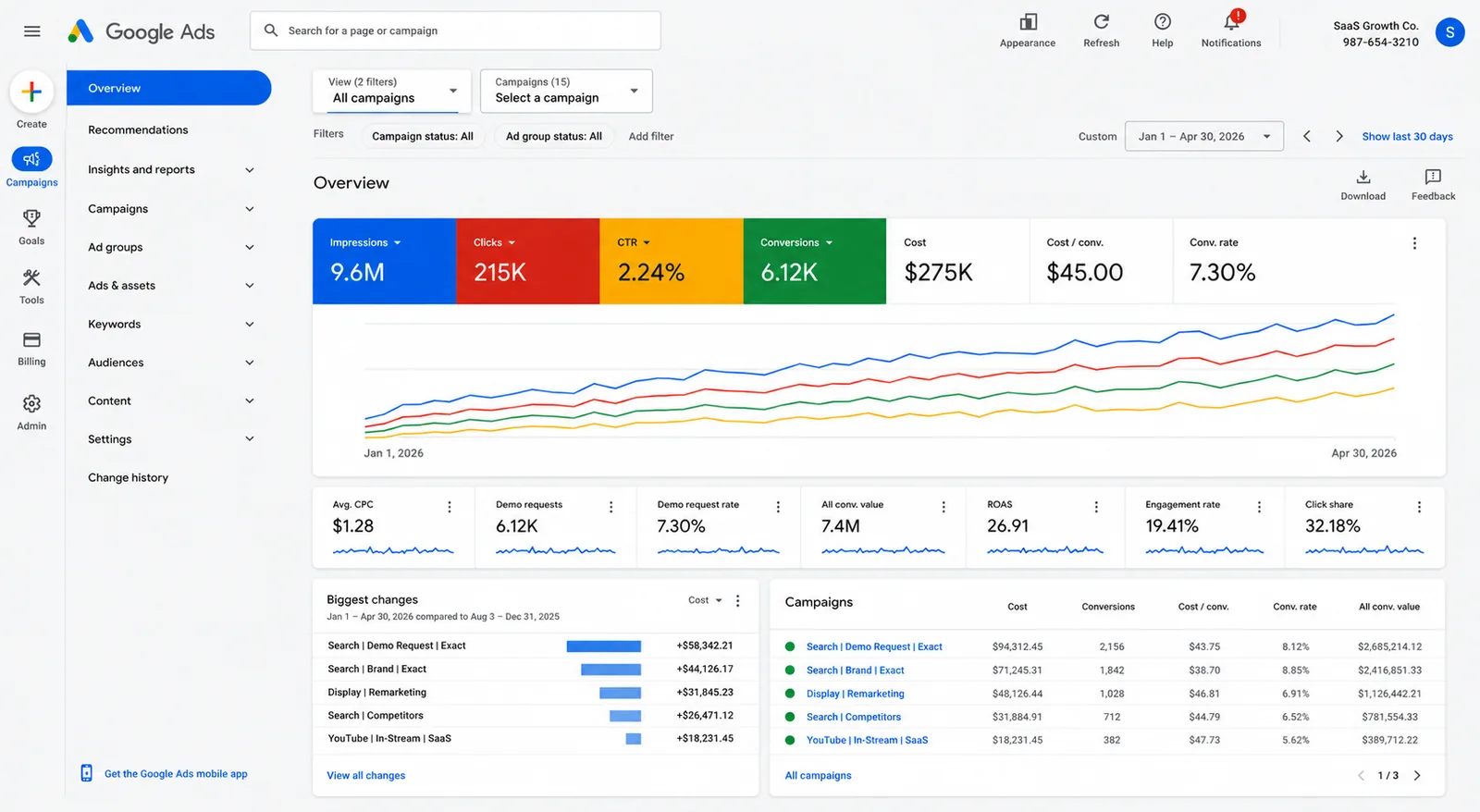
SaaS Growth Co. had demo requests, but the economics were not working. Their Google Ads account was active, but branded, competitor, and cold intent traffic were being treated too similarly. That blurred performance data and made it harder to know which campaigns actually created pipeline.
Powerhouse Media rebuilt the account around funnel stage, making the performance marketing system easier to measure, optimize, and scale.
The Challenge
The company was generating demos, but cost per acquisition was too high for sustainable growth. The account had no clear separation between users who already knew the brand, users comparing competitors, and users searching for a solution category for the first time.
That meant one budget pool was trying to solve multiple jobs. The ads, bids, landing page messaging, and quality score signals were not specific enough for each intent level.
What We Did
We rebuilt the account by funnel intent and matched each stage to a different campaign job.
- Bottom-funnel demo demand: Search campaigns focused on high-intent demo and solution keywords.
- Brand protection: Brand exact campaigns captured warm demand efficiently.
- Competitor terms: Separate messaging addressed comparison-stage buyers directly.
- YouTube In-Stream: Upper-funnel video supported brand recall before search demand peaked.
- Display remarketing: Warm visitors were brought back with clearer next-step messaging.
- Quality Score work: Ad copy and landing page relevance were tightened to reduce wasted CPC.
The Result
Over four months, the account produced 26.91x ROAS from $275K in spend, generating $7.4M in conversion value.
- 6,120 demo requests
- $45 average demo CPA
- 7.30% conversion rate
- 8.6/10 Quality Score across campaigns
- Improved separation between brand, competitor, and cold demand
Why It Worked
SaaS buyers do not all arrive with the same intent. Someone searching for a demo is not in the same mindset as someone comparing alternatives or passively seeing a YouTube ad. The account started working when each intent level received its own campaign logic, bid strategy, and message.
This is also why conversion tracking matters so much. The goal was not simply to generate cheaper clicks; it was to generate qualified demo demand that could connect to pipeline.
What SaaS Teams Can Learn
If your SaaS Google Ads account blends every query type together, your data will hide the truth. Separate brand, competitor, solution, and demo intent before judging the channel. Then connect conversion events to CRM or sales outcomes wherever possible.
For a broader paid media framework, see our guide on Google Ads vs Meta Ads performance.
Frequently Asked Questions
Why did funnel segmentation improve SaaS Google Ads performance?
It let each campaign match a specific buyer intent, which improved relevance, budget control, messaging, and measurement.
Should SaaS brands bid on competitor keywords?
Competitor campaigns can work when the landing page and ad message are built for comparison-stage buyers, but they should be measured separately from brand and demo campaigns.
Was YouTube responsible for the ROAS?
YouTube supported upper-funnel recall, while search captured high-intent demand. The result came from the full system working together.
What should SaaS companies track besides form fills?
Track qualified demos, opportunity creation, pipeline value, sales-qualified leads, and closed revenue where possible.
Want a Cleaner SaaS Acquisition System?
Powerhouse Media builds paid media systems around funnel stage, tracking, and measurable revenue outcomes. Start with a performance marketing growth audit.
Related Insights
Continue exploring Case Studies
Ready to apply this to your brand?
We partner with brands looking to scale profitably.
Apply for a strategy call