Med Spa Lead Generation: How Top Clinics Build Predictable Growth Systems
Why "Lead Generation" Is Really About Systems, Not Tactics
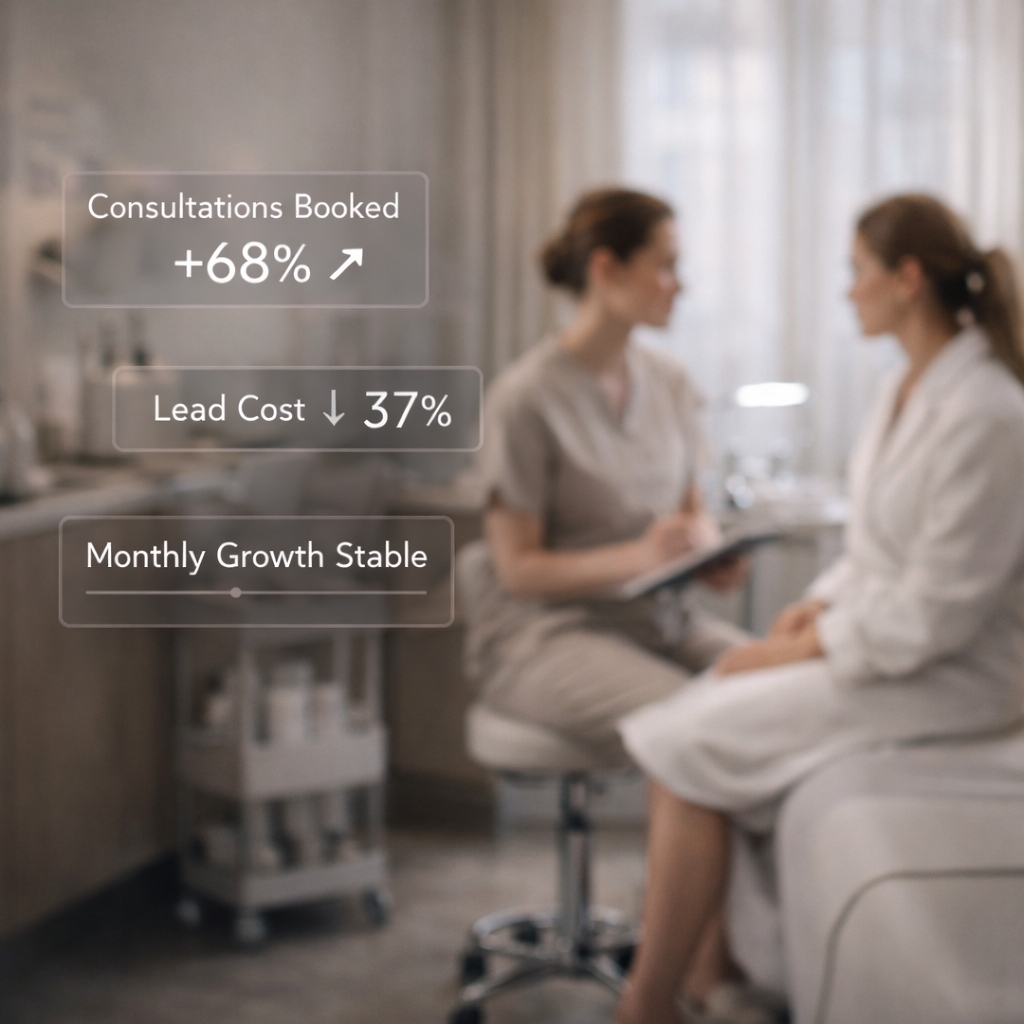
Clinic owners often approach lead generation as a search for the right tactic — the right ad, the right offer, the right platform. But the clinics that achieve consistent, predictable growth typically aren't relying on any single tactic; they've built an integrated system where multiple lead sources, a structured funnel, and a reliable conversion process all work together.
This guide takes a systems-level view of med spa lead generation, covering how the individual channels discussed throughout our content — SEO, Google Ads, Meta Ads — fit together into a cohesive growth engine. For the complete strategic framework, see our Aesthetic Clinic Marketing pillar guide.
Lead Sources: Understanding the Full Mix
Most med spas generate leads from a combination of sources, each with different characteristics in terms of cost, intent, and timeline.
Organic search (SEO) — Lower ongoing cost, higher intent (since visitors are actively searching), but takes longer to build (see our SEO for Aesthetic Clinics guide for the full framework).
Paid search (Google Ads) — Immediate visibility, high intent, but ongoing cost required to sustain (see our Google Ads for Aesthetic Clinics guide).
Paid social (Meta Ads) — Builds awareness and interest among people not yet actively searching, often at a lower cost per lead than search, but typically lower immediate intent (see our Meta Ads for Aesthetic Clinics guide).
Organic social — Lower direct lead volume than paid channels typically, but builds long-term brand familiarity and supports retargeting and referral behavior.
Referrals — Often the highest-converting lead source, but difficult to scale deliberately; can be supported (though not fully controlled) through patient experience and incentive programs.
Local Google Business Profile and Maps visibility — A distinct channel from broader organic search, particularly important given how much local search traffic flows specifically through Maps and the local pack (see our Local SEO for Med Spas and Google Business Profile for Aesthetic Clinics guides).
A predictable growth system typically draws from multiple sources rather than relying heavily on just one, since over-reliance on a single channel creates vulnerability if that channel's performance changes (due to algorithm updates, increased competition, or rising costs).
Funnels: Mapping the Path From Awareness to Booking
A lead generation funnel maps the stages a prospective patient moves through, from first becoming aware of the clinic to becoming a booked, attended patient. Understanding this funnel helps identify where drop-off is actually occurring, rather than assuming the issue is always "not enough leads."
Awareness — The prospective patient becomes aware of the clinic, whether through search, social media, or referral.
Consideration — The prospect evaluates the clinic against alternatives, often researching treatments, reading reviews, and comparing pricing.
Lead capture — The prospect takes an initial action — submitting a form, calling, or messaging — indicating interest in booking.
Consultation booking — The lead is converted into a scheduled consultation appointment.
Consultation attendance — The scheduled appointment is actually attended (a stage where many clinics see significant drop-off if reminder and confirmation systems aren't strong).
Treatment booking — Following the consultation, the patient books and pays for treatment.
Retention and referral — Post-treatment, the patient either becomes a recurring patient, refers others, or both — feeding back into the awareness stage for future growth.
Each stage of this funnel can be measured, and identifying which stage has the highest drop-off rate often reveals where marketing investment should actually be focused — which isn't always "more leads at the top."
Paid Advertising's Role Within the System
Paid advertising (covered in depth in our dedicated Google Ads and Meta Ads guides) plays a specific role within the broader lead generation system: generating immediate, controllable lead volume that can be scaled up or down based on capacity and goals.
The key insight for paid advertising within a systems context is that its effectiveness is heavily dependent on the other parts of the system — a high-performing ad campaign that sends leads into a slow, disorganized follow-up process will underperform a more modest campaign paired with excellent follow-up and conversion systems.
SEO's Role Within the System
SEO (covered in our SEO for Aesthetic Clinics guide) contributes to the system differently than paid advertising — rather than immediate, controllable volume, it builds a compounding asset that reduces overall dependency on paid channels over time.
A mature lead generation system typically sees its lead mix shift over time, with organic and local search contributing an increasing share as SEO investment compounds, allowing paid advertising budget to be either reduced or redirected toward scaling growth further rather than maintaining baseline lead volume.
Retargeting: Recovering Leads Who Didn't Convert Immediately
Most prospective patients don't convert on their first interaction with a clinic's marketing. Retargeting — re-engaging people who've shown some interest but haven't yet taken action — is a critical, often underutilized component of a complete lead generation system.
Website retargeting — Re-engaging visitors who viewed treatment pages or pricing information but didn't submit a form, typically through Meta or Google display retargeting campaigns.
Lead nurture sequences — For leads who submitted initial interest but haven't yet booked a consultation, an automated (but personalized-feeling) follow-up sequence via email and SMS keeps the clinic top of mind without requiring constant manual outreach.
Consultation no-show recovery — Re-engaging prospects who booked but didn't attend a consultation, rather than treating them as a lost lead permanently.
Past patient reactivation — For patients who haven't returned within an expected timeframe, reactivation campaigns can recover otherwise-dormant relationships, often at a lower cost than acquiring entirely new leads.
Conversion Systems: Where Leads Become Patients
The conversion system — everything that happens between a lead coming in and a patient being booked and treated — often has more impact on overall results than the lead generation tactics themselves, yet receives far less attention.
Speed to first contact — Leads contacted within minutes convert at meaningfully higher rates than those contacted hours later; this is one of the most controllable, highest-impact factors in the entire system.
Consistent follow-up cadence — A defined sequence of follow-up attempts (calls, texts, emails) over a set period, rather than a single attempt followed by giving up, recovers leads who simply weren't reachable on the first try.
Same-call or same-message booking — Booking the consultation during the initial contact, rather than leaving it open-ended, significantly improves the likelihood of an actual scheduled (and attended) appointment.
CRM or lead tracking system — Without a system to track every lead through each funnel stage, leads inevitably fall through the cracks — followed up with inconsistently or not at all, particularly during busy periods.
Building Your Own Predictable Growth System
Bringing these elements together, a practical approach to building a med spa lead generation system typically involves:
- Establish baseline tracking — Before optimizing anything, understand current lead volume, source, and conversion rate at each funnel stage.
- Identify the highest-impact gap — Whether that's insufficient lead volume, poor consultation show rates, or weak follow-up speed, addressing the biggest bottleneck first typically produces the most noticeable improvement.
- Diversify lead sources gradually — Rather than relying on a single channel, build out complementary sources (paid and organic, search and social) over time.
- Systematize follow-up — Implement consistent speed-to-contact and follow-up cadence standards, since this often has more impact than any single marketing tactic.
- Layer in retargeting and nurture — Once primary lead sources and conversion systems are functioning well, retargeting and nurture sequences capture additional value from existing traffic and leads.
Frequently Asked Questions
What's the difference between lead generation and marketing?
Marketing encompasses the broader effort to build awareness and demand, while lead generation specifically refers to the systems and tactics that convert that awareness into actual contact information and booking intent from prospective patients.
Which lead source produces the highest-quality leads for med spas?
Referrals typically convert at the highest rates, followed generally by organic search (given the high intent of active searchers), though paid channels can produce excellent quality leads when properly targeted and paired with strong conversion systems.
How many lead sources should a med spa rely on?
Diversifying across at least a few complementary sources (such as paid search, organic/local search, and one social channel) reduces vulnerability to performance changes in any single channel, though the right mix depends on the clinic's specific market and resources.
What's the most overlooked part of med spa lead generation?
The conversion system — speed to contact, follow-up consistency, and booking process — often receives far less attention than the lead generation tactics themselves, despite frequently having a larger impact on overall results.
How quickly should a new lead be contacted?
As quickly as possible — ideally within minutes rather than hours, since response speed is one of the most significant, controllable factors affecting whether a lead converts into a booked consultation.
Is retargeting necessary, or just an added expense?
Retargeting typically recovers value from traffic and leads a clinic has already paid to generate, often at a lower incremental cost than acquiring entirely new leads, making it a high-value addition to a complete system rather than an optional extra.
How do I know which part of my funnel needs the most attention?
By measuring conversion rates at each stage (awareness to lead, lead to booked consultation, booked to attended, attended to treatment), the stage with the largest relative drop-off typically reveals where attention is most needed.
Lead generation becomes more predictable when it is built from the full aesthetic clinic marketing framework instead of isolated campaigns that are disconnected from SEO, landing pages, and follow-up.
Ready to Build a Predictable Growth System for Your Clinic?
Consistent growth comes from an integrated system, not isolated tactics. Book a growth audit with Powerhouse Media to map your current lead generation system, identify the biggest gaps, and build a more predictable path to growth.
Aesthetic Clinic Marketing Cluster
Build the full patient acquisition system
Ready to apply this to your brand?
We partner with brands looking to scale profitably.
Apply for a strategy call