The Mobile Detailer’s Blueprint for SEO Dominance
The "Invisible Service Area" Problem
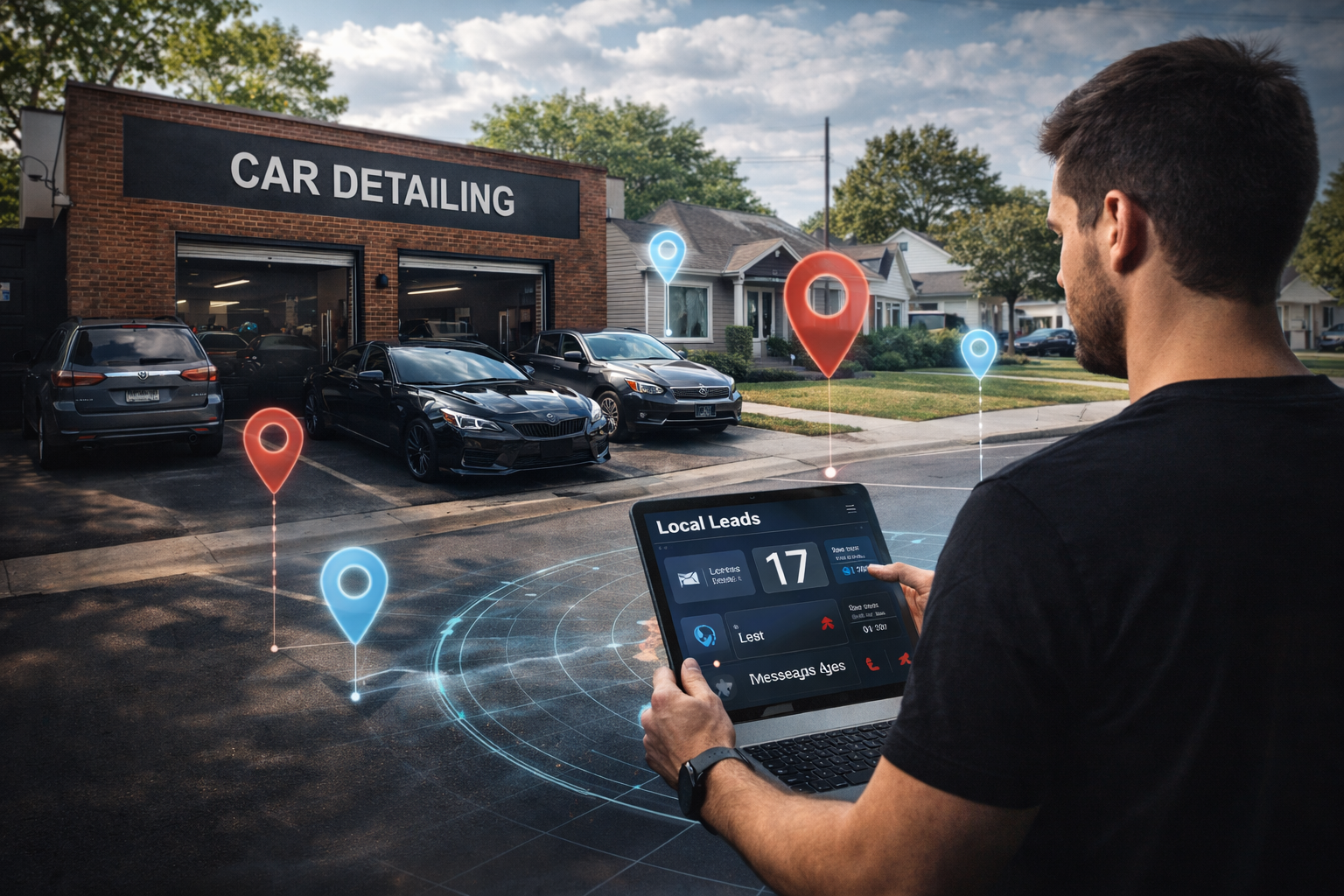
We’ve noticed a specific struggle among mobile detailers: the "invisible service area" problem. Unlike a fixed-address shop that can plant a physical pin on Google Maps, mobile operators often find themselves buried in search results because they lack a storefront to anchor their authority.
However, the brands quietly dominating the local market aren't winning because they have a building; they are winning because they have mastered Hyper-Local Contextual Signals. For a mobile detailer in 2026, Local SEO isn’t just about having a website—it’s about proving to Google that you are a mobile authority across multiple suburban hubs simultaneously.
The Service Area Business (SAB) Blueprint
The most common mistake mobile detailers make is leaving their Google Business Profile (GBP) address blank without defining specific "Service Areas." Google needs to know exactly where your van can travel to rank you effectively.
- The Error: Selecting an entire state or a massive 50-mile radius. This dilutes your "ranking strength" and makes you a generic option everywhere rather than a top option anywhere.
- The Fix: Selecting 10–15 specific, high-intent suburban cities or ZIP codes.
By being specific, you tell the algorithm exactly which neighborhood auctions you want to participate in. If you try to be everywhere, you end up being nowhere. In 2026, Google rewards "Density"—showing up frequently in a small area matters more than showing up occasionally in a large one.
Geotagged Proof of Work: The Digital Footprint
Google’s algorithm is increasingly prioritizing "Real-World Evidence." Most mobile detailers upload photos to their website but forget to include the metadata that proves where the work was done.
Every time you finish a ceramic coating in a client’s driveway, that photo contains GPS coordinates. When you upload these "geotagged" photos to your Google Business Profile, you are providing hard data to Google that you are active in that specific neighborhood. Over time, this builds "Geographic Prominence."
The Strategy: Use your smartphone's native camera (which tags GPS by default) and upload directly to your GBP "Updates" section.
The Benefit: It makes you the default choice when a neighbor three streets over searches for "mobile detailing near me," because Google has "seen" you working in that exact area.
"SEO for mobile businesses is a game of proximity. If you don't tell Google where you are, Google will assume you aren't there."
City-Specific Landing Pages: Authority at Scale
If you want to rank in three different suburbs, you need three different landing pages. A single "Services" page is a missed opportunity.
High-performing mobile brands build "Locality Pages" (e.g., Mobile Detailing in Plano, TX or Ceramic Coating in Frisco). These pages should not be duplicate content; they should mention local landmarks, neighborhood-specific challenges (like hard water issues in the region), and feature testimonials from clients in that specific city.
- Mandatory Component: Embed a Google Map of that specific city on the page.
- Content Rule: Mention at least two local landmarks or main roads to anchor the page in local context.
Strategy Over Proximity
Dominating Local SEO as a mobile operator requires a move from "passive" listing to "active" signal creation. By defining your service areas surgically, geotagging your results, and building localized landing pages, you create a digital footprint that is larger than any physical shop.
Need a mobile SEO blueprint? We help mobile detailers dominate their local market. Contact Powerhouse Media.
Ready to apply this to your brand?
We partner with brands looking to scale profitably.
Apply for a strategy call